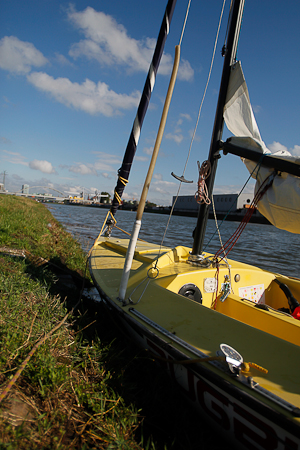
The Oosterschelde and its underestimated tidal streams

english, leibesertüchtigung, logbook, TEXT

N 51° 36.173  E 003° 50.686′  | Marina WSV Noord Beveland . Colijnsplaat

After a month hanging around at Delta Marina on the Veerse Meer, MILVA is excited to enter new seas. The weather forecast looked reasonable to go out at 3 Beaufort with less wind expected towards the evening. MILVAs former owner Jogi joined me on the trip, as i didn’t dare to mess up the manoeuvre alone in Zandkreeksluis lock, and felt enough challenged after having again touched the ground two days before and being unable to reef the main sail. So, this time more preparation.oosterschelde 1 Beaufort
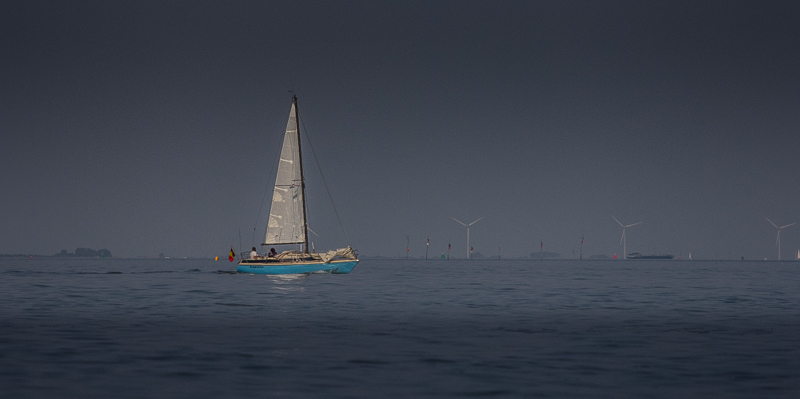
My last night’s lecture about reefing in Steve Sleight’s Complete Sailing Manual gave me some idea, that the yellow rope coming out of the boom’s end might be the solution. For the first time I prepared life jackets and life buoy to be at hands immediately in case of an emergency situation, the line bound to the bath ladder (just to avoid the crew searching for it, and finally found – throw it out without having tied the rescue line somewhere on the boat) and the main sail prepared to hoist in a reefed state. The black cloud over Kortgene made me asking the harbour master for any weather warnings, which he assured being no problem, so finally we left Kortgene at 3 o’clock in the afternoon, two hours already after low tide at the lock, which I knew would be suboptimal, but having enough wind should work out, as I only saw a difference of half a knot in speed going out the Zandkreekpassage one week before at a similar point of time. This however turned out to be a misconception. 

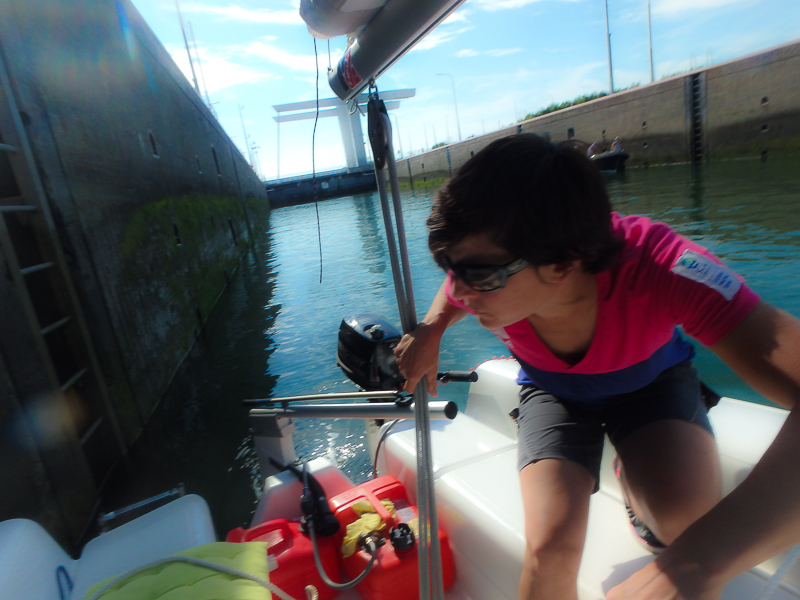
It is always a question in front of the locks to decide to berth on the available berths, or to make some turnarounds until the bridge and lock are going to open. As the comfortable berth was already occupied by three boats, and four more boats more or less optimally bound to the dolphins plus a big tank vessel waiting in front of the lock, the decision was easy to make, but cost in the end 20 minutes of waiting and 25 minutes to get inside and out of the lock.

It is always a good advice to keep some distance to big vessels, as the water masses moved by a starting ship’s engine make quite some turbulence, thus difficult to hold a small boat and its spreader away from the lock’s wall.
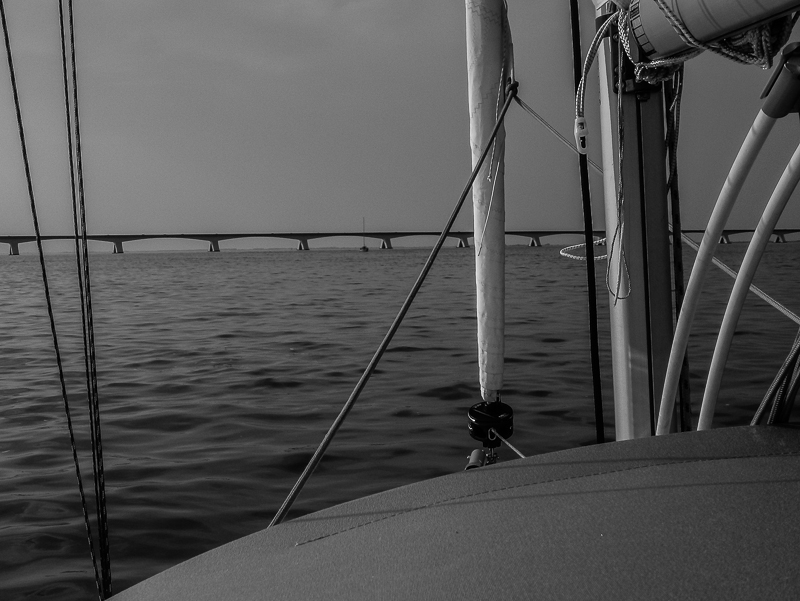
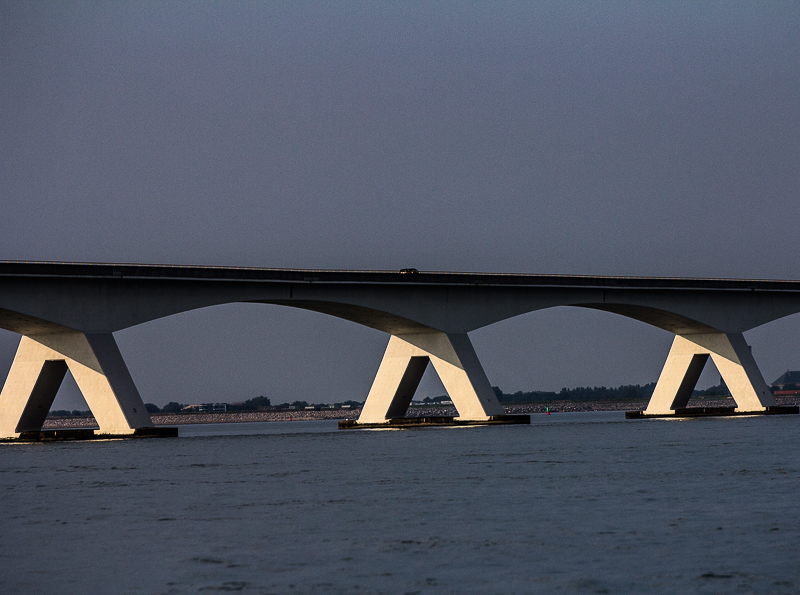
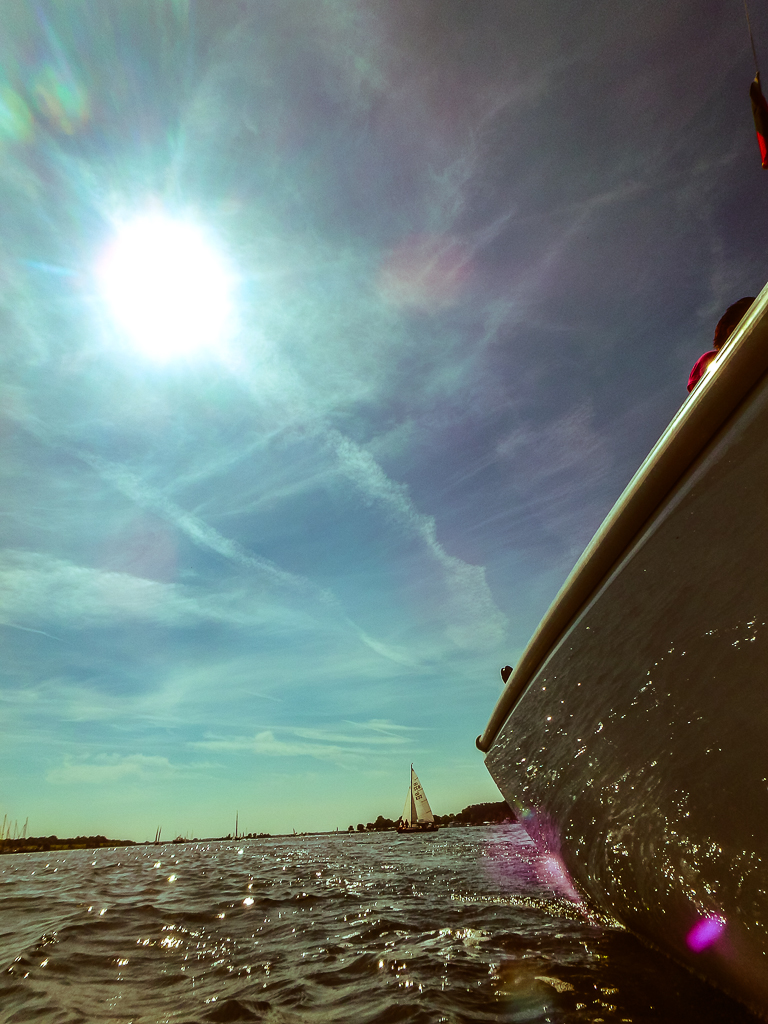
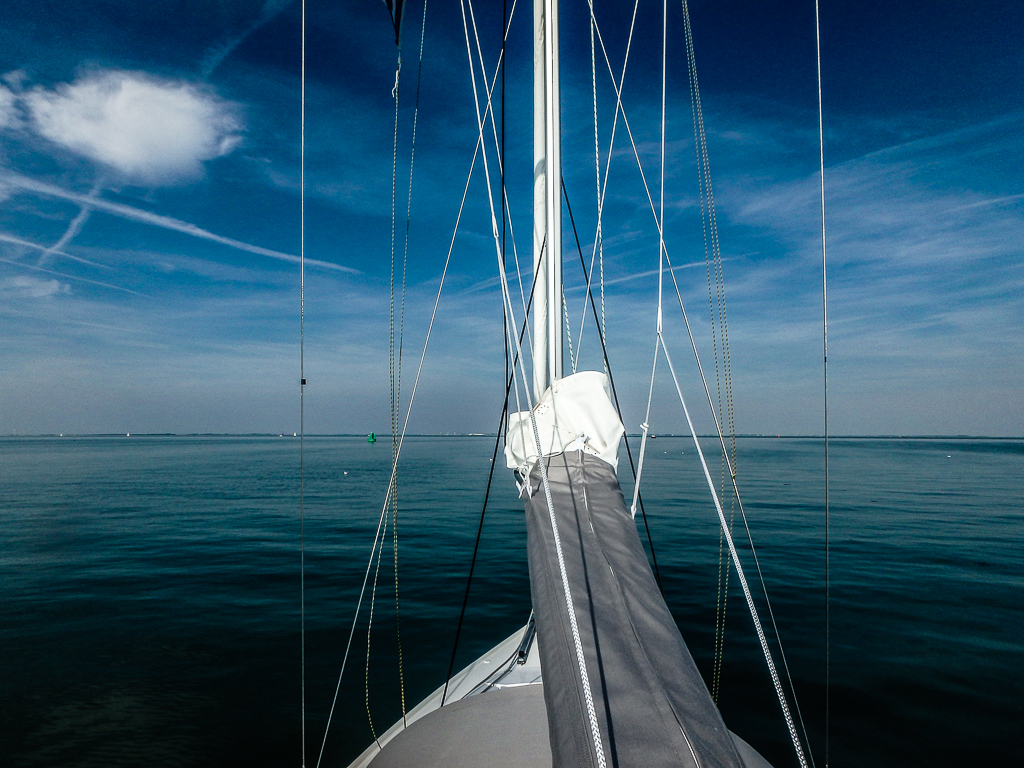
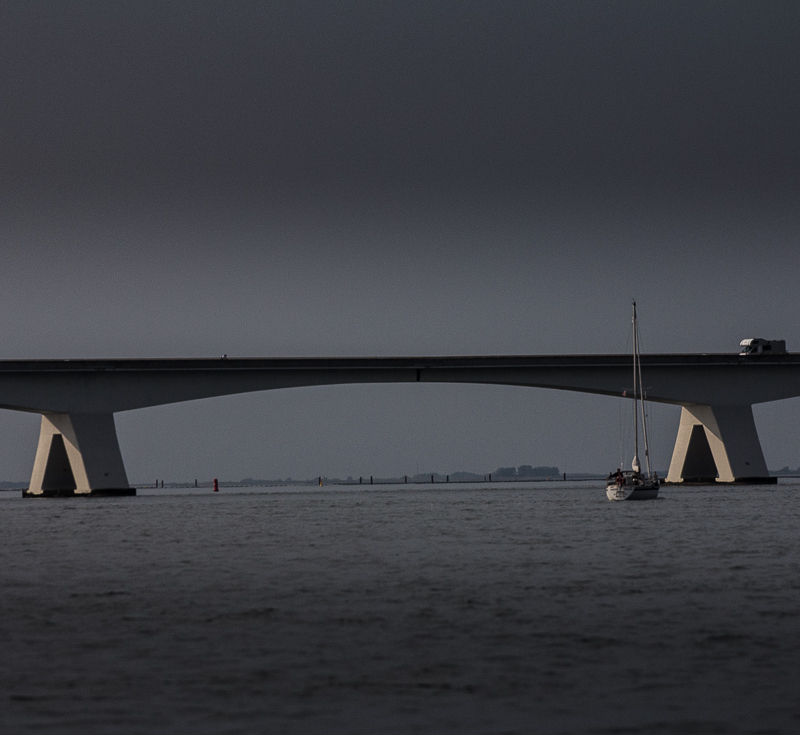
ZeelandsbrugWe left the lock and set sails to get out of the small passage with the wind coming from behind in run and broad reach direction. The maximum speed of 5.2 knots over ground we made just during this short trip, competing against bigger yachts and regretting that we had reefed the main sail. At green buoy #Z1 we turned to beam reach towards Zeelandbrug, intending to take the path on the left side of the channel along the green buoys. Zeelandsbrug zeelandbrug-8462Until a red buoy appeared and wind and boat speed decreased rapidly. After a while we reached the green buoy again but still didn’t make any progress into the intended direction towards Zeelandbrug. Checking the Navionics app on the IPad showed 2.5 knots less speed over ground than what the log instrument displayed, and revealed to us having sailed a big circle instead keeping a straight course  towards the final destination. As Freddy – le vibrateur is meanwhile running without any issue, that was finally the solution to reach Colijnsplaat harbour within the expected time around 7 p.m.
Lola Bodum Diver

english, logbook, TEXT

N 51° 33.242′   E 003° 48.530′ | Delta Marina .  Kortgene

The initial plan was a good one. To get up early, have a quick breakfast and start sailing when other sailors start sailing: in the morning. The point is, that during the passed three weeks of having MILVA swimming in saltwater, we never managed to get out of the harbour before 3 in the afternoon. It was a cloudy day, Windfinder gave a forecast with wind from north-west of 4 beaufort. Our idea was to sail to Veere for a coffee. We started with coffee from my specifically for MILVA acquired Bodum french press (like all other dishes actually too fancy to use on a boat with the kitchen utilities stored in four wooden wine boxes) on the day after having met Roxani, Greg and the twins in Woluwe shopping mall. A special french press so to say. Even though I prefer espresso and Lola under circumstances of yachting the quick instant coffee solution. And the breakfast took longer, as I normally can spend hours sipping on a black tea, kind of meditation, and Lola went through some state of nostalgy telling Argentinian stories.VA18breakfast-8412

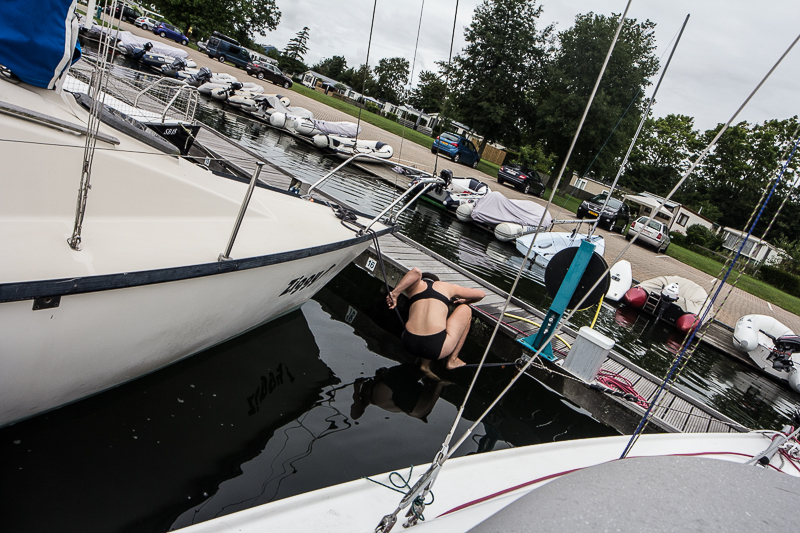
Around ten Lola started washing the dishes, the quick way – with cold water from the water hose attached to the berth. Everything was clean but during rinsing the french press filter attached to the metal stick on the pot’s lock the three metal pieces making out the filter went into the sea. underground. we could hardly see the three pieces due to the cloudy weather. “OK – I jump!” – Lola announced, Astonishing me, as i didn’t feel for swimming today. It took some time, some legs in the water, until I took initiative to make use of the scuba diving equipment and the thought that any sailor should be able to dive underneath her boat. I hate diving. It scares me. in several tries diving in 2m deep dark water, which was harder than what my memory gave of accomplishing the silver swimming badge at the age of 10, I could rescue two of the three metal pieces. the third one stayed on the ground, hidden under the dust, seaweed and oysters I dispersed during my panicking dives. We gave up. Seeing a french press some days later in a shop, the diving was totally useless anyway, as with the three metal pieces the most important part, a tiny screw, went underground too. And MILVA is just no submarine.va18-8414
In the end, we departed at 1 p.m. and realizing at the corner towards Veere that the wind coming from the front is with 5 Beaufort just too strong to get there. So we turned and went back for two unnecessary Kiss & Rides 😦   

Kiss & Ride

english, logbook, TEXT

N 51° 31.846′   E 003° 43.518′ | Veerse Meer around red buoy S4

In Belgium there’s an expression for a car dropping a person and continue onwards: Kiss and ride.  MILVA under command of her all female crew seems to be a gooder kisser and rider as well – especially in narrow-shallow Veerse Meer at stronger wind forces losing speed in failing tacks and drifting onshore. Kiss the ground with 1.15 metres draught of her keel and get herself floating again without external aid! Just the five horse power outboard engine, the crew hanging on the sidestay to get the boat tilt a bit, in extreme cases pushing with a paddle, and MILVA with her 800kg and keel is in maneouvrable state again. Our neighbours with their 22 feet longkeel boat and 6HP engine reported never having been able to get out of the mostly sandy ground by own forces. And just recently saw a far to big yacht for this area getting stuck in the middle of the fairway. Which brings me to my other observation sailing in Zeeland: never ever navigate and trust fancy navigation apps! Use a recently updated paper nautical chart. Following screenshot of Navionics app shows my track doing the two times kissing & riding by drifting too far starbards of the imaginary line marked by the red buoys. Considering the paper chart during sailing (as on the IPad with daylight beaming  on its surface you cannot see any dot on the digital chart) I knew that the depth was around 1.3m – 1.1m. The echolot showed 0.8-0.9 when the boat got stuck on ground. There is almost no tidal range in Veerse Meer. But Navionics showing 2.4m depth is just wrong and proofs that it should only be used for planning, tracking and checking the current position with where you think you are pointing on the paper chart.

Distance: 13 nm
Duration: 3h 48min
Max./Avg.Speed: 5.6 / 3.4 kts
Wind Speed: 4-5 Beaufort

MILVA & TECHNIK: Freddy, le vibrateur

logbook, techie, TEXT

N 51° 32.639′   E 003° 51.837′ | Veerse Meer – Zandkreeksluis

Wollte MILVA etwa mit den Herren von der Schleuse flirten oder braucht auch ein Außenbordmotor etwas Zuneigung?
Und Vertrauen?Es wäre nicht das erste Mal, dass mich ein Mercury Außenbordmotor nicht so ganz mit seiner Zuverlässigkeit überzeugt, denke an das VIBRATEUR MALHEUR oder die Ausfahrt mit Madame C, nach welcher sie nie wieder wagte ein Boot zu besteigen. Jedenfalls keines, das ich steuerte oder gar segelte!

Wir haben die MILVA heute mal durch die Schleuse gejagt und die Oosterschelde schnuppern lassen. Sowas kann man ja mal fürn Ernstfall üben bei wenig Wind und Verkehr. Ein nettes niederländisches Seglerpärchen, das wir im Bistro La Barca getroffen hatten, gab uns den Tipp, eine Leine von der vorderen Klampe durch den Ring an der Schleusenwand nach hinten auf die hintere Klampe durchzuziehen. Eine Methode geeignet für Einhandsegler und MILVA, die eh zu kurz wäre für ein Festmachen in der Schleuse mit Vor- und Achterleine.

Die zwei Seemeilen zur Schleuse liefen wunderbar. Wir überstanden den Prozess des Schleusens an sich mit der Erkenntnis, dass es doch einige Meter aufwärts ging und man die Leine besser auf Slip hält und das Boot gut abfendert. Die Brücke ging auf. Wir werfen die Leine los, stoßen uns von der Schleusenwand ab, und der Motor geht aus. Die Frau mit den Fendern hat tolle Tipps parat, die Frau am Motor versucht vergeblich den Motor nach gelungenem Start mit Und ohne Choke am Laufen zu halten. Milva driftet wieder Richtung Schleusenwand, die Jungs von der Schleuse werden unruhig und fragen was los ist. In anderen Worten: man schreit sich panisch an, was nicht zur Lösung des Problems beiträgt. Wir bekommen Tipps vom Schleusenwärter, die Brücke bleibt offen, und schließlich hilft uns ein französisch sprechender Motorbootfahrer beim Starten des Außenbordmotors, indem er beim gelungenen Start ohne Choke Kurz Gas gibt.

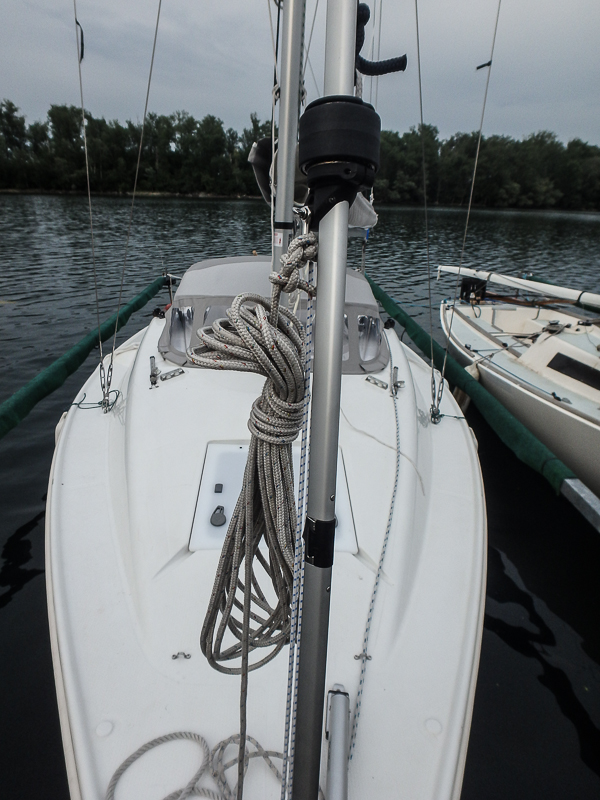
MILVA ohne Segel. Findet den Fehler in der Betakelung!

Wir verlassen die Zandkreeksluis durch den schmalen Kanal in Richtung Oosterschelde, bis kurz vor der Einmündung an Tonne Z1 der Motor erneut ins Stottern kommt und ausgeht. Wir ziehen die Fock aus dem Rollreff, starten den Motor erneut und machen kehrt, zurück zur Schleuse, zurück ins Veerse Meer und den sicheren Hafen. Bei ein bis zwei Windstärken und wenig Strömung wie an diesem Abend ist ein unzuverlässiger Motor nicht das Problem, aber macht uns wenig Hoffnung bei ändernden Windbedingungen mit MILVA auf große Fahrt zu gehen.

Wir schaffen es mit drei weiteren Ausfällen in und durch die Schleuse und zählen bis zur Delta Marina dreizehn Motorneustarts. Verflixt! Was hat ein neuer Mercury 5PS Außenbordmotor gemeinsam mit dem alten 3.3 PS Mercury, genannt LE VIBRATEUR?

Le Vibrateur hatte zuletzt einen verschmutzten Vergaser. nach der Reinigung beim Neckarstädter Rasenmäherfachmann brachte ich ihn gar nicht mehr an, da das Gelbe Sofa ohne den Ballast besser zu segeln war. Das Vergaserproblem kann man vermeiden, indem man nach jeder Fahrt den Vergaser und die Benzinzuleitungen leerlaufen lässt. Wir taten das, mit jeder Hafeneinfahrt. Die Wasserkühlung funktionierte, bei Verwendung im Salzwasser sollte man den Motor mit Süßwasser spülen. Das konnte aber nicht der Grund sein. Ich gebe dem Außenborder den Namen Freddy und spreche ihm Vertrauen zu. Vielleicht ist es so wie mit Krankheiten. Je größer die Angst davor, desto wahrscheinlicher dass man betroffen wird.

Wir öffnen den Deckel und stellen fest, dass der interne Tank fast leer ist. Aber was das mit dem vollen externen Tank und den Ausfällen zu tun hatte, die so klangen, als bekäme der Motor nicht genügend Benzin kam uns nicht in den Sinn. Nach intensiverer Studie des englischen Handbuchs und Einholen mehrerer Meinungen von Autobastlern und Motorboothändlern hatten wir die Lösung: der Motor zieht Benzin von dem Ort des geringsten Widerstands. Und die Zuleitung zum fast leeren internen Tank war während aller unserer ca. 20stündigen gesamtnutzung des Motors geöffnet.

MILVA, the Veerse Meer and its shallow shoreline

english, logbook

N 51° 32.728′   E 003° 48.341′ | Red Buoy Number VM22

After a day of craning, setting up the mast, sprayhood and preparing the main drop system, MILVA went on her first cruise in the Veerse Meer. Two sweet Belgian ladies in the harbour, with a lifetime experience in sailing doing an afternoon tea time in the sun, commented our departure with ‘next time you should prepare that just a bit better’.

kortgene_vm22At wind speed of 17 knots in peaks, lots of motor boats and sail yachts around (due to the public holiday in Belgium) in the narrow channel just in front of Delta Marina in Kortgene, it was a quite demanding first time cruise and ended up in drifting to shore due to an unnecessary giving way to a motorboat. It is to blame La capitana who let MILVA pass red buoy VM22 starboard side trying to tack at almost no speed and wind gusts. The tack didn’t work, so MILVA slowly drifted on shore and slightly got stuck with its 1.15m keel in the ground. Two sailors in a dinghie offered their help, people onshore trying to give advice, but in the end Lala-lala-Lola managed to get the engine running backwards and La capitana could push the boat with the rudder standing at the bow and donating her (for sailing apparently unsuitable) green Rayban sunglasses to the Veerse Meer. Another reason to finally get the fancy polarized Polaroid sunglasses!

MILVA & TECHNIK: ABRIGGEN EINER VARIANTA 18

logbook, techie

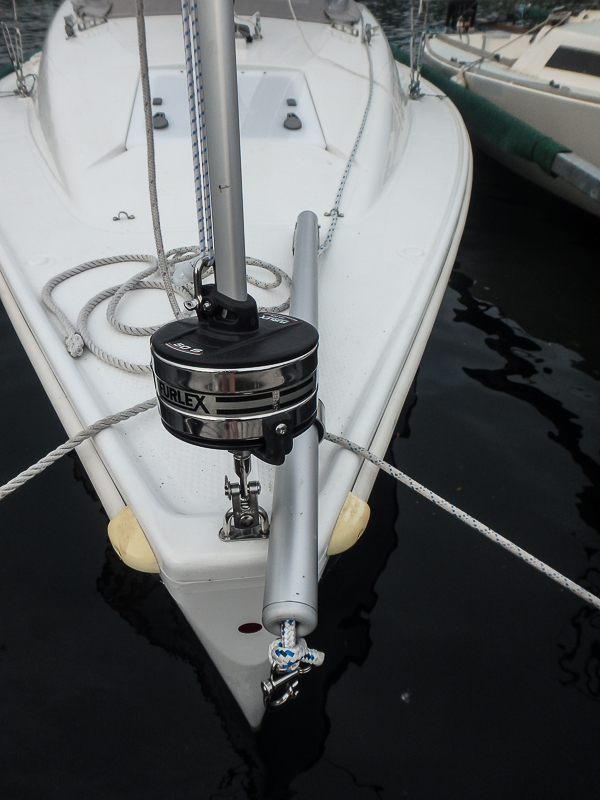
1. Genua aus Furlex Rollreffanlage ausfädeln (an Metallschlitz darauf achten, sodass Segel sauber durch den Schlitz läuft)

– Fallen sichern

2. Sprayhood abbauen
– Spanngurte lösen
– Reißverschlüsse öffnen
– Befestigung vorsichtig aus der Schiene führen
– Sprayhood mit Fenstern oben – Knicke vermeiden – sicher ablegen und später auf Baum mit Großsegel/maindrop system im Schiff ablegen
– Metallbögen zusammenklappen und entfernen und im Boot sicher ablegen
 
3. Maindrop System abbauen ( weiße Fallen: Palstek am Maindrop öffnen, aus dem Fall Ring nehmen und an der maindrop persenning wieder befestigen. Die Fallen bleiben an der Saling hängen, befestigt an den mastklampen
 
4. dirk lösen und zweite person bitten, baum zu halten/hochzudrücken. dann baumniederholer und baumkicker barton teil aus baum lösen und entfernen.
 
5. baum von zweiter person rútteln lassen und dabei baum aus mastvorrichtung entfernen. baum ins boot legen
 
6. kreuz für mastauflage vorbereiten
– nach hinten am ruder und nach vorne durch metallöse im cockpit absichern, kreuz in spalt hinter backskistte stellen
7. styroporblock als ablage auf vorschiff legen (ca. über luke)
 
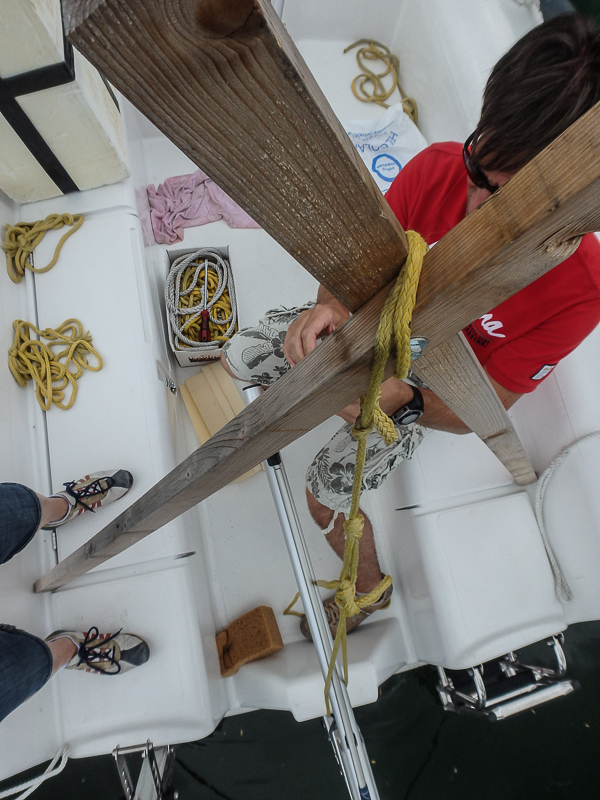
8. mast legen
– vanten lösen aber nicht abmachen!
– zweite Person entfernt splint /bolzen an furlex und hält furlex. splint/bolzen zwischen gennakerbaum und klampe sicher ablegen und später an furlex befestigen
– zweite person lässt langsam mast ab, während erste person mast nach hinten hält und schließlich auf dem kreuz ablegt
 
9. fallen und kabel am mast mit gummibändern/zeisingen sichern und mast auf kreuz sichern, damit mast sich nicht vom kreuz bewegen kann
10. Salinge lösen
11. vanten aus salingen lösen (untervant ist hinter obervant überkreuzt)
12. vanten aus mast lösen und nach seiten beschriftet ins schiff legen
13. mast um styroporblock und bug mit leine  sichern
 

Le malheur avec le vibrateur

leibesertüchtigung, logbook
Was soll da schon passieren? Ich trug meine auftriebsfähige Regattaweste und hatte mit Segeljogi einen ausgebildeten Rettungsschwimmer in Rente an Bord, der auch schon älteren Damen Multitaskingschwimmen (Schwimmen+Tratschen) beigebracht hat. Seine Idee, den gedachten Altrhein-Segelnachmittag fortgeschrittener zu gestalten und LE VIBRATEUR einem Leistungstest zu unterziehen, fiel mir anfänglich schwer ernst zu nehmen, aber ein erfahrener Segellehrer, der mir als Privatlebensretter neulich aus dem Kaffeesatz gelesen wurde, sollte doch ausreichen, dass ich meiner Schiffsführerpflicht nachkomme:
Befolgung schiffahrtspolizeilicher Vorschriften und Gewährleistung der Sicherheit der an Bord befindlichen Personen 😉

Die an Bord befindlichen Personen kamen wieder sicher im Heimathafen für ein wohlverdientes Weizenbier an. Der an Außenbord befindliche Motor verlor beim Ablegen am Neckarufer seine Schraubenblätter. Nach der einst gerissenen Genua fehlt mir an Segelerfahrung nun nur noch der Mast- und Schotbruch samt Kentern durch Unterfahren von Brücken, die nicht genügend hoch sind.

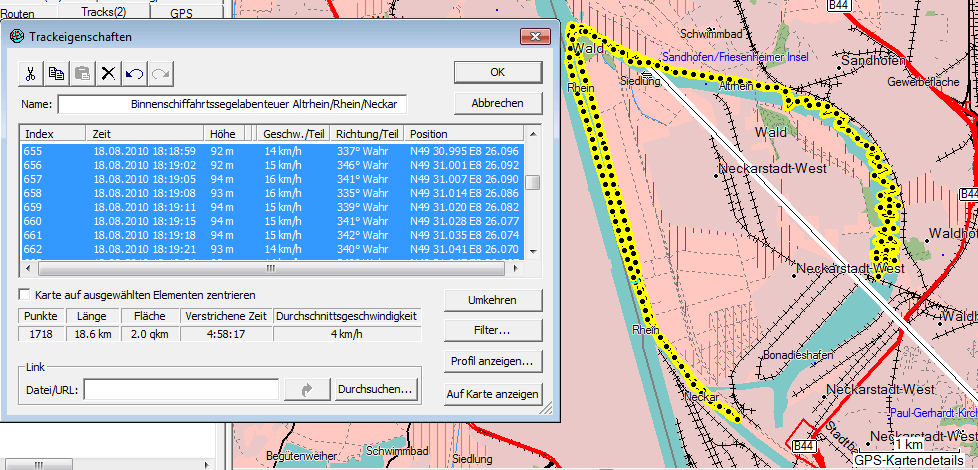
Nach schraubenbedingter Beendigung des Vorankommens unter Motor musste das Binnenschiffahrtsstraßensegelabenteuer nach Überprüfung des Allgemeinzustands des Segelbootes und des Vorhandenseins von Paddeln also unter Segel fortgesetzt werden. Dabei ist besonders dem Sog und Wellenschlag der begegnenden Berufsschiffahrt fernzubleiben. Bugwellen der Berufsschiffahrt sind im rechten Winkel zu befahren, da sonst ein Kentern der kielfreien Segeljolle möglich ist. Für alle Fälle ist der Hafenfunk auf Kanal 11 erreichbar. Wir hatten kein Funkgerät an Bord, dafür aber Proviant, GPS-Gerät und eine Spiegelreflexkamera.

Der Rhein kann nachweislich wie zu Segeljogis Vaters Vorm-Krieg-Zeiten besegelt werden. Mit 8,8 Knoten Höchstgeschwindigkeit in Strömungsrichtung mit Raumschot-Rückenwind. Segeljogi blieb auch in kritischer Situation, die Einfahrt aus der Strömung zurück in den Sandhofener Altrhein entspannt, so dass mir die Gefahr der Situation, als ich kurz zum Indianerdasein aufgefordert wurde, nicht bewusst wurde.

Logbuch:
Startzeit: 15 Uhr.
Rückkehr: 21 Uhr
Distanz: 10.3 nm
Höchstgeschwindigkeit: 8.8 kt
Schnitt in Bewegung: 2.4 kt